
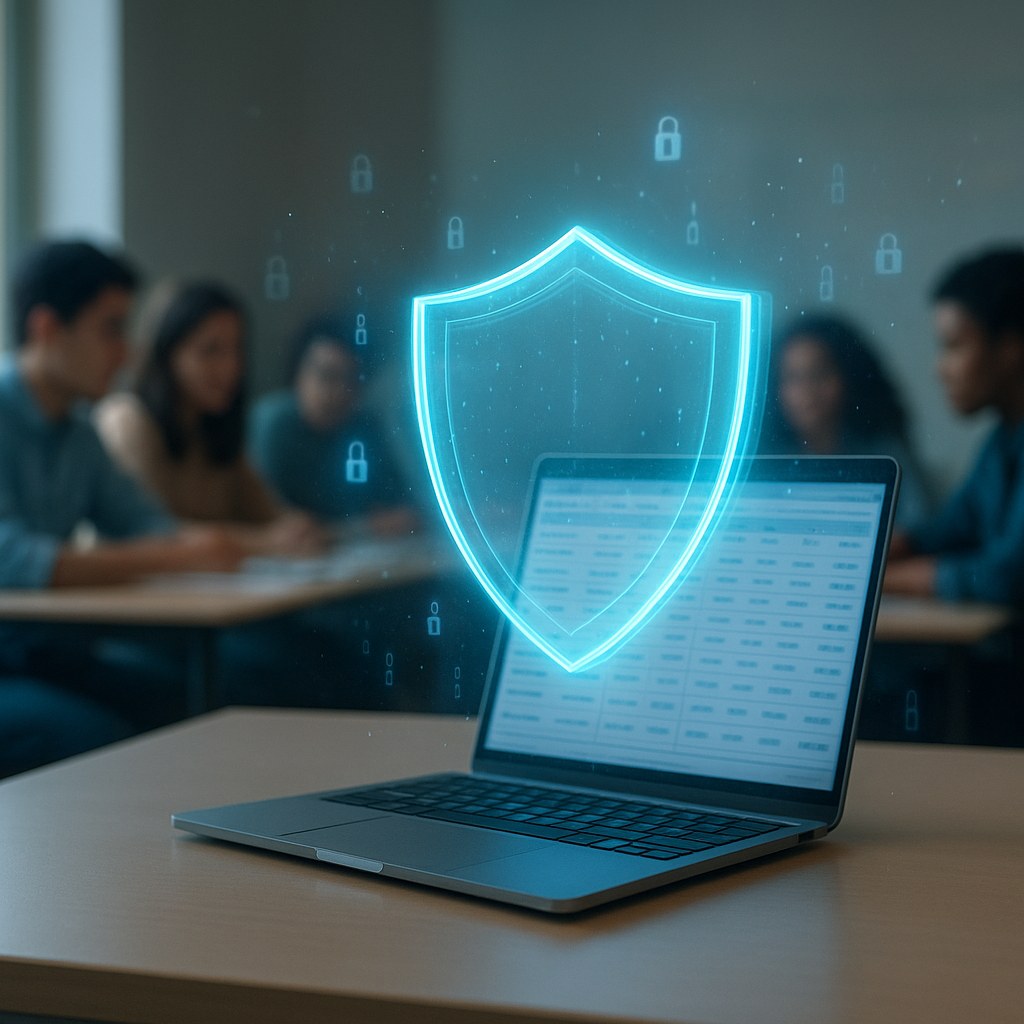
In classrooms across the country, pupils now submit homework through apps, teachers record grades in cloud-based systems, and parents track attendance via online portals. Education has become profoundly digital — and with that transformation comes a responsibility that schools can no longer afford to treat as an afterthought: protecting student data. From names and addresses to health records, behavioural reports and biometric information, educational institutions hold some of the most sensitive data imaginable. The role of cybersecurity in safeguarding this information isn’t merely a technical concern; it’s fundamental to the future of education itself.
Why Student Data Is a Prime Target for Cybercriminals
It may seem surprising, but education is now one of the most attacked sectors in the world. Research from Check Point found that educational organisations faced an average of more than 2,500 cyberattacks per week in recent years — significantly higher than most other industries. So why are schools such attractive targets?
- Valuable personal data: Children’s identities are a goldmine for identity thieves. Because minors rarely check their credit reports, fraudulent activity using their details can go undetected for years.
- Under-resourced defences: Many schools operate on tight budgets, with small IT teams and ageing infrastructure, making them comparatively easy targets.
- A vast attack surface: Thousands of devices, dozens of third-party apps and a constantly changing user base create countless potential entry points.
- High-pressure environments: When ransomware locks down a school’s systems days before exams, attackers know the pressure to pay is enormous.
The consequences are far from hypothetical. High-profile ransomware attacks have forced entire school districts to cancel classes, delayed exam results, and exposed the personal records of hundreds of thousands of pupils. In some cases, sensitive counselling notes and safeguarding files have been published online by criminal groups.
What Data Do Schools Actually Hold?
To appreciate the scale of the challenge, it helps to understand exactly what information educational institutions collect and store:
- Identity records: names, dates of birth, addresses, photographs and sometimes passport or immigration details
- Academic data: grades, attendance records, disciplinary history and special educational needs assessments
- Health information: allergies, medical conditions, vaccination records and mental health notes
- Financial details: parent payment information, free school meal eligibility and bursary records
- Behavioural data: learning analytics from educational apps, browsing histories on school devices and even keystroke patterns
Much of this data must be retained for years, and some of it — particularly safeguarding records — is among the most sensitive information held anywhere in the public sector.
The Legal Landscape: FERPA, GDPR and Beyond
Protecting student privacy isn’t just good practice — it’s a legal obligation. In the United States, the Family Educational Rights and Privacy Act (FERPA) governs access to student education records, while the Children’s Online Privacy Protection Act (COPPA) restricts how companies collect data from children under 13. In the UK and Europe, the GDPR and the Data Protection Act 2018 impose strict requirements on how schools process children’s data, including rules on consent, data minimisation and breach notification.
Non-compliance can result in substantial fines, but the reputational damage often hurts more. Parents entrust schools with their children’s information; once that trust is broken, it is extraordinarily difficult to rebuild.
The Most Common Cybersecurity Threats Facing Education
Phishing and Social Engineering
Phishing remains the single most common attack vector in education. Staff receive emails disguised as messages from IT departments, government bodies or even senior leadership, tricking them into revealing credentials or downloading malware. During busy periods — enrolment season, exam time, or the start of term — vigilance tends to slip, and attackers know it.
Ransomware
Ransomware attacks against schools and universities have risen sharply. Criminal groups encrypt critical systems and demand payment, often threatening to leak stolen data if the ransom isn’t met. The average cost of recovery from a ransomware attack in education has been estimated at well over £1 million when downtime, restoration and reputational harm are factored in.
Third-Party and EdTech Risks
The average school uses dozens — sometimes hundreds — of educational apps and online services. Each one is a potential vulnerability. Several high-profile breaches have originated not from the school itself, but from a supplier with weak security practices. Protecting student privacy while using online educational services therefore requires careful vetting of every vendor that touches student data.
Insider Threats and Human Error
Not every incident is malicious. Misconfigured cloud storage, laptops left unlocked, and spreadsheets emailed to the wrong recipient account for a significant share of data breaches in education. Cybersecurity is as much about people and processes as it is about technology.
Practical Strategies for Protecting Student Data
So, what are a few ways you can help protect a student’s privacy? Whether you’re an IT administrator, teacher, governor or parent, these evidence-based strategies make a genuine difference.
1. Enforce Strong Authentication
Multi-factor authentication (MFA) is one of the most effective defences available, blocking the vast majority of account takeover attempts. It should be mandatory for staff accounts and, where age-appropriate, for students as well. Pair this with strong, unique passwords and, ideally, a password manager.
2. Apply the Principle of Least Privilege
Users should only have access to the data they genuinely need for their role. A teaching assistant doesn’t require access to financial records; a lunchtime supervisor doesn’t need safeguarding files. Limiting access dramatically reduces the damage any single compromised account can cause.
3. Encrypt Data at Rest and in Transit
Encryption ensures that even if data is stolen or intercepted, it remains unreadable without the correct keys. This applies to laptops, servers, backups and any communication containing personal information.
4. Vet Third-Party Vendors Rigorously
Before adopting any new educational app or service, schools should ask searching questions:
- What data does the service collect, and why?
- Where is the data stored, and is it encrypted?
- Does the vendor comply with FERPA, COPPA or GDPR as applicable?
- What happens to the data when the contract ends?
- Has the vendor undergone independent security audits?
Data processing agreements should be in place with every supplier handling student information.
5. Keep Systems Updated and Backed Up
Unpatched software is an open door. Regular updates, combined with offline, tested backups, mean that even a successful ransomware attack need not be catastrophic. If you can restore your systems independently, the attackers lose their leverage.
6. Invest in Training and Awareness
Technology alone cannot stop a well-crafted phishing email. Regular, engaging training helps staff and students recognise suspicious messages, handle data responsibly and report incidents quickly. Many breaches are contained early simply because someone spoke up.
The Role of Students and Parents
Cybersecurity in education is a shared responsibility. Students themselves should be taught digital citizenship from an early age: how to create strong passwords, recognise scams, think carefully before sharing personal information, and understand their own digital footprint. Digital transformation in schools makes this education even more critical.
Parents, meanwhile, can play an active role by:
- Asking schools what apps their children use and what data those apps collect
- Reviewing privacy settings on school-issued devices and accounts
- Teaching children not to share login details, even with friends
- Monitoring for signs of identity misuse, such as unexpected post or credit offers in a child’s name
Building a Culture of Security
Ultimately, the most resilient institutions treat cybersecurity not as a one-off project but as an ongoing culture. This means leadership buy-in, dedicated budget, clear policies, incident response plans that are regularly rehearsed, and honest communication with parents when things go wrong. Frameworks such as the NIST Cybersecurity Framework or national guidance from bodies like the UK’s National Cyber Security Centre provide excellent starting points for schools building their defences from the ground up.
It’s also worth remembering that security and privacy should be designed into new technology from the outset — a principle known as “privacy by design” — rather than bolted on afterwards.
Conclusion
The digital transformation of education has brought extraordinary benefits: personalised learning, greater accessibility and more efficient administration. But it has also made schools custodians of vast quantities of sensitive data — and prime targets for cybercriminals. Protecting student data requires a layered approach: robust technical controls such as multi-factor authentication and encryption, rigorous vetting of third-party educational services, compliance with legal frameworks like FERPA and GDPR, and — perhaps most importantly — a culture of awareness that includes staff, students and parents alike.
Cybersecurity in education is not simply about preventing breaches; it’s about preserving trust, protecting children’s futures and ensuring that technology remains a force for good in the classroom. The stakes could hardly be higher — and the time to act is now.