
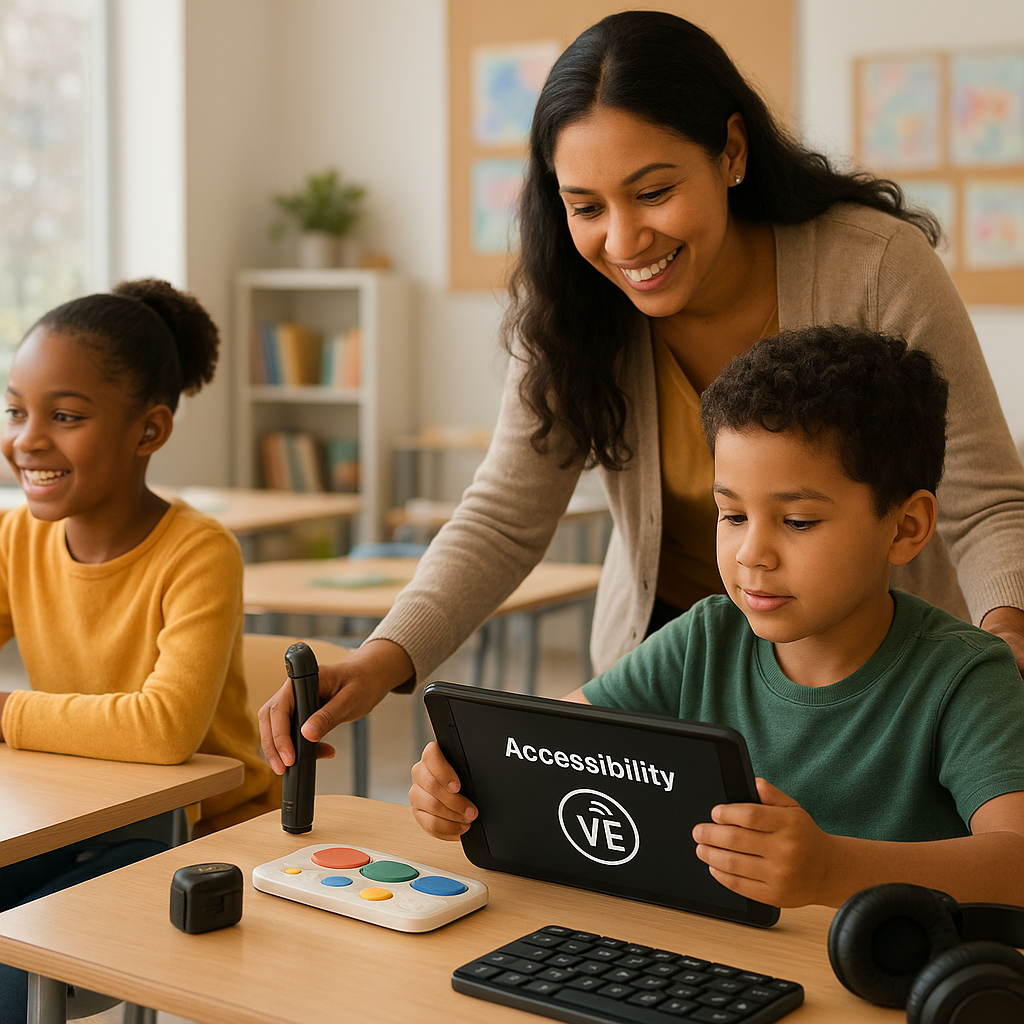
Walk into almost any modern classroom and you’ll likely spot it — a student using a tablet with text-to-speech software, another wearing noise-cancelling headphones, perhaps someone communicating through a dedicated device rather than spoken words. Assistive technology has quietly transformed what inclusive education looks like in practice, shifting it from a theoretical ideal into something genuinely achievable for millions of students worldwide.
Yet despite its growing presence in schools, assistive technology remains widely misunderstood — often seen as a last resort for students with severe disabilities, rather than recognised as a spectrum of tools that can support a remarkably broad range of learning needs. Understanding its true role means looking beyond the hardware and software to examine how these tools change the educational experience at its core.
What Assistive Technology Actually Means in an Educational Context
The term “assistive technology” covers an enormous range of tools, from the highly sophisticated to the refreshingly simple. Under the Individuals with Disabilities Education Act (IDEA) in the United States — and mirrored in similar legislation across the UK and internationally — assistive technology is broadly defined as any item, piece of equipment, or system that helps a student with a disability function more effectively in their educational environment.
That definition is deliberately wide. It includes:
- Low-tech tools — pencil grips, slanted writing boards, enlarged print materials, tactile labels
- Mid-tech tools — audio recorders, calculators, talking dictionaries, FM listening systems
- High-tech tools — screen readers, speech-generating devices, eye-gaze communication systems, specialist learning software
This range matters because it dismantles the assumption that assistive technology is exclusively about expensive gadgets. A simple magnification sheet placed over a page of text is assistive technology. So is a colour-coded timetable for a student with autism. The principle is the same regardless of cost or complexity: remove or reduce a barrier that would otherwise prevent meaningful participation in learning.
How Assistive Technology Contributes to Inclusive Education
Inclusion, in its truest educational sense, is not simply about placing students with disabilities in mainstream classrooms. It is about ensuring those students can access the curriculum, participate in lessons, and engage with their peers on genuinely equal terms. This is precisely where assistive technology becomes indispensable.
Research published in Disability and Rehabilitation: Assistive Technology found that students with physical, cognitive, and sensory disabilities who used appropriate assistive technology demonstrated significantly higher rates of academic participation and social engagement compared to those without access to such tools. The technology does not change the student’s disability — it changes what the disability prevents them from doing.
Bridging the Gap Between Ability and Access
Consider a student with dyslexia. Their ability to understand complex ideas, think critically, and engage with subject matter may be entirely unaffected by their reading difficulty. Without support, however, the written nature of most classroom instruction creates a persistent barrier. Text-to-speech software, word prediction tools, and audiobook access do not lower academic expectations — they remove the obstacle that prevented the student from demonstrating what they already know.
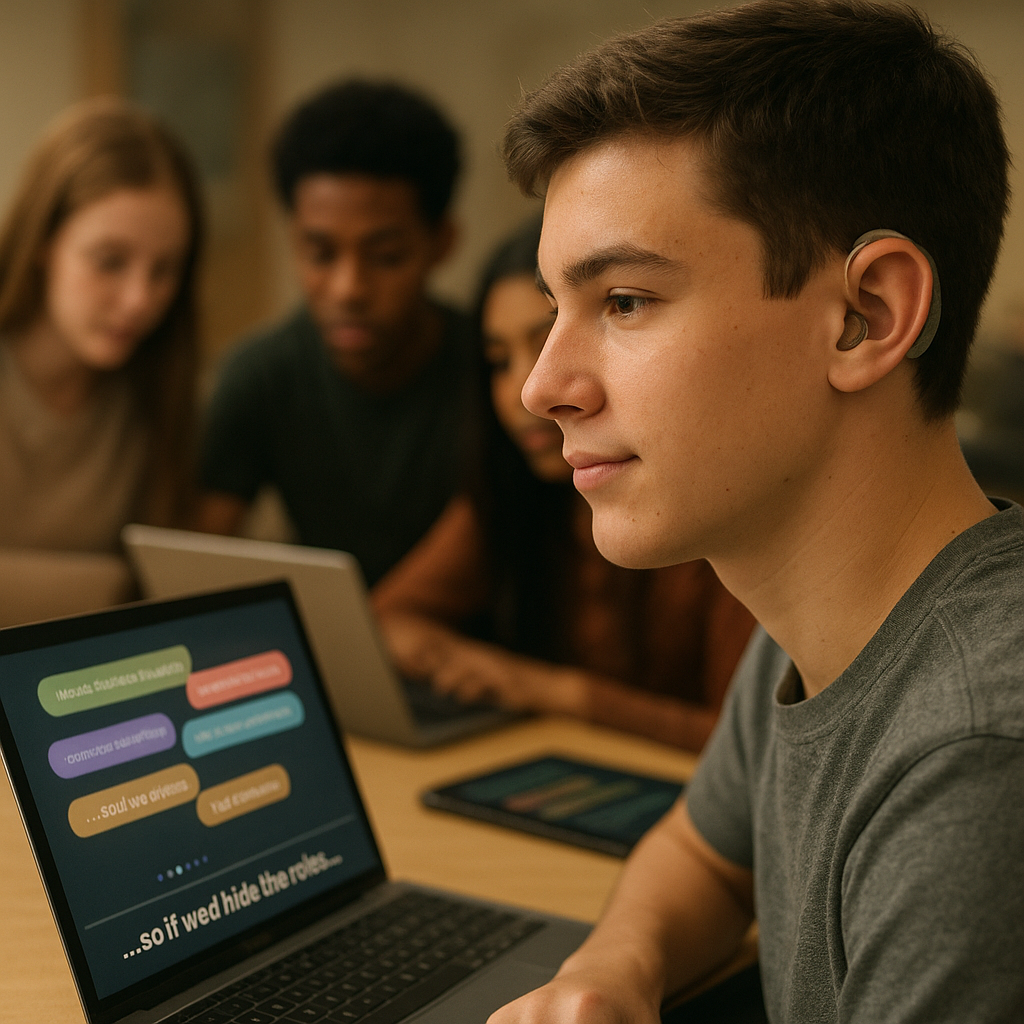
The same principle applies across a wide spectrum of needs. A student with cerebral palsy who cannot hold a pencil may use voice recognition software to produce written work. A student with a hearing impairment may use real-time captioning to follow teacher instruction. A student with severe anxiety may use a visual timetable to navigate transitions between activities. In each case, the technology creates access where access did not previously exist.
Supporting Communication and Language Development
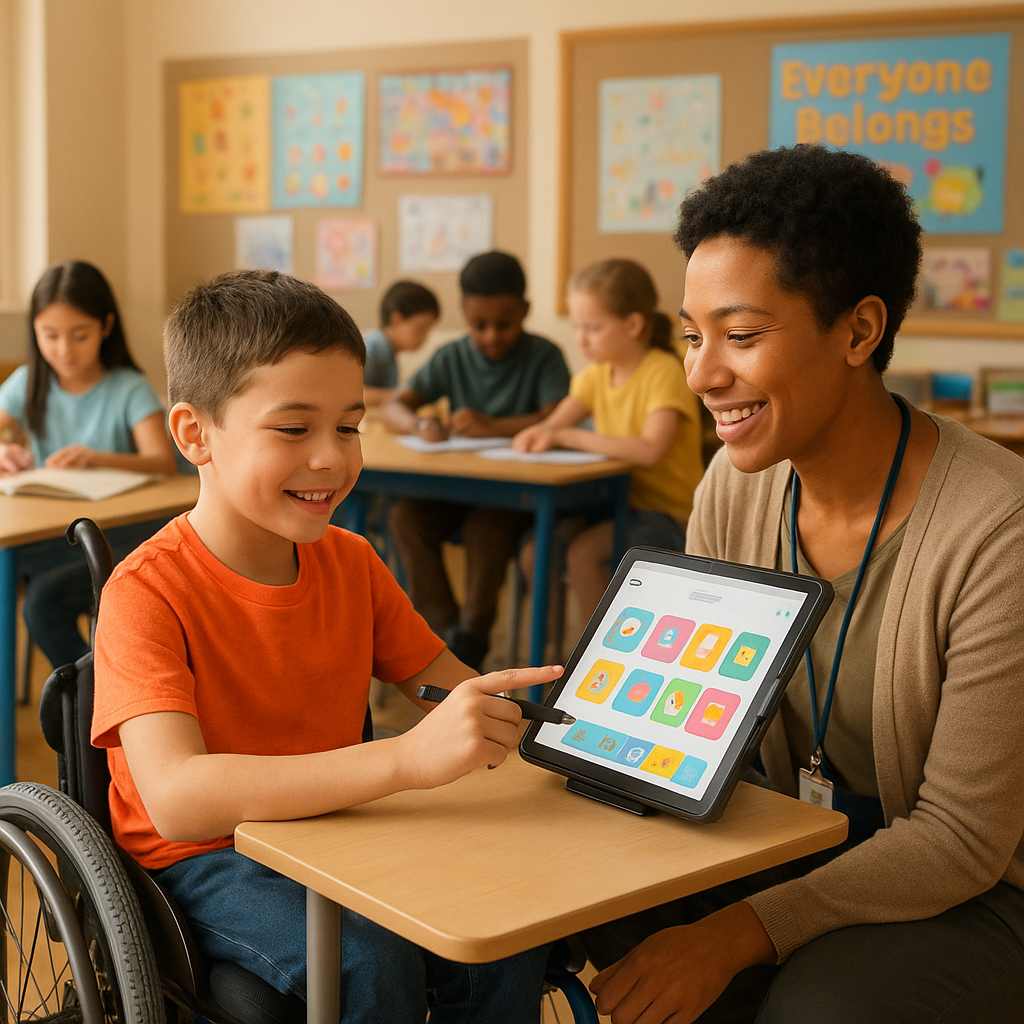
For students with complex communication needs, augmentative and alternative communication (AAC) devices represent one of the most profound applications of assistive technology in inclusive settings. These range from low-tech picture boards to sophisticated speech-generating devices that allow non-verbal students to construct sentences, express needs, and participate in classroom discussions.
Research consistently demonstrates that AAC use does not inhibit the development of natural speech — in many cases, it supports it. The American Speech-Language-Hearing Association notes that AAC tools help build language understanding and communication confidence, particularly when introduced early and consistently.
Assistive Technology in Practice: Real Classroom Examples
Abstract principles become more meaningful when grounded in specific, recognisable scenarios. The following examples illustrate how assistive technology functions across different types of need and different stages of education.
Reading and Literacy Support
- Text-to-speech software such as Read&Write or NaturalReader converts written text to audio, enabling students with dyslexia, visual impairments, or processing difficulties to access printed materials independently
- Dyslexia-friendly fonts and background colours reduce visual crowding and improve reading comfort for many students
- Optical character recognition (OCR) tools convert scanned documents into readable digital text, making printed worksheets accessible to screen reader users
Writing and Expression
- Word prediction software reduces the physical and cognitive effort of writing by anticipating words based on initial letters or context
- Voice recognition tools such as Dragon NaturallySpeaking allow students to dictate rather than type or write by hand
- Mind-mapping software helps students with executive function difficulties to plan and organise their thinking before committing to writing
Maths and Numeracy
- Talking calculators vocalise number inputs and results, supporting students with visual impairments or dyscalculia
- Virtual manipulatives provide tactile-style engagement with mathematical concepts in a digital format, accessible via touchscreen or keyboard
- Graphic organisers and visual maths tools support students who struggle with abstract numerical reasoning
How Assistive Technology Promotes Inclusion and Participation
The social dimension of assistive technology is frequently underestimated. Inclusive education is not just about academic access — it is equally about belonging, contribution, and the ability to interact meaningfully with peers. When a student can communicate through an AAC device, follow a lesson through captioning, or complete a task independently using adapted tools, something important happens beyond academic performance: their status within the classroom shifts.
Students who can participate — who can raise their hand, answer a question, contribute to a group project — are seen differently by their classmates and, crucially, by themselves. Studies have found correlations between assistive technology use and improved self-esteem, reduced frustration, and greater willingness to engage in academic risk-taking among students with disabilities. For this reason, balancing technology use with student well-being is an important consideration for educators and parents alike.
This matters for how we think about inclusion overall. Assistive technology is not simply a compensatory mechanism — it is an enabler of the kind of authentic participation that inclusive education is supposed to deliver.
Challenges and Considerations in Implementing Assistive Technology
Despite its transformative potential, assistive technology is not without its complexities. Schools and educators face a number of practical and systemic challenges in making it work effectively.
Assessment and Matching
One of the most critical — and most frequently skipped — steps is a thorough assessment of individual student needs. The same disability does not affect every student in the same way, and the same technology will not suit every student with that disability. A poorly matched tool can be as limiting as no tool at all. Effective implementation typically involves a team including the student, parents, teachers, and specialists such as speech and language therapists or occupational therapists.
Training and Consistency
Technology without training is hardware gathering dust. Research consistently highlights insufficient training as one of the primary reasons assistive technology interventions fail in schools. Teachers need to understand not only how to use the tools but how to integrate them naturally into classroom routines so that using assistive technology feels as unremarkable as using a pencil. Schools investing in structured platforms to support this process may find it helpful to consider choosing the right learning management system to deliver and track staff training consistently.
Equity of Access
There is a persistent and uncomfortable equity gap in assistive technology access. Students in well-resourced schools and those from higher-income families are considerably more likely to have access to effective tools than those in underfunded settings. According to the World Health Organisation, only between 5% and 15% of people in low-income countries who need assistive technology can access it. Even within wealthier nations, access is uneven and often dependent on where a student happens to live rather than what they genuinely need.
Attitudes and Stigma
Students — particularly adolescents — sometimes resist using assistive technology because it marks them out as different. Addressing this requires thoughtful classroom cultures where difference is normalised, and where the use of tools and adaptations is framed as intelligent problem-solving rather than deficit management.
The Role of Policy and Legislation
Legislative frameworks play a fundamental role in shaping assistive technology provision in schools. In England and Wales, the SEND Code of Practice places clear responsibilities on schools to identify and address barriers to learning, with assistive technology frequently central to effective provision. Education, Health and Care (EHC) Plans may specify particular technologies required to meet a student’s needs, giving them a degree of legal protection.
In the United States, both IDEA and Section 508 of the Rehabilitation Act require schools to consider assistive technology for all students with disabilities, ensuring it is assessed and, where appropriate, provided as part of a student’s Individualised Education Programme (IEP).
These frameworks are imperfect and inconsistently applied, but they establish an important principle: access to assistive technology is not a privilege but an entitlement for students who need it.
Looking at the Evidence
The body of evidence supporting assistive technology in inclusive education has grown substantially over the past two decades. A 2019 systematic review published in Computers & Education found that assistive technology interventions consistently improved academic outcomes for students with learning disabilities, with the strongest effects observed when tools were matched appropriately to individual needs and integrated consistently into instruction.
Research from Reading Rockets and similar literacy-focused organisations points specifically to the effectiveness of text-to-speech and word prediction tools in improving writing quality and reading comprehension for students with dyslexia and related conditions. Meanwhile, studies examining AAC use have found improvements not only in communication but in literacy development, social interaction, and family relationships.
The evidence is not uniformly positive — some studies note that poorly implemented technology can create dependency or distraction — but the weight of research supports thoughtful, well-matched assistive technology as a genuinely effective component of inclusive educational practice.
Conclusion
Assistive technology’s true role in inclusive education is neither to fix disabilities nor to lower expectations — it is to dismantle the barriers that prevent capable students from demonstrating what they already know and can do. When the right tool is matched to the right need, implemented with proper training, and embedded within a genuinely inclusive classroom culture, the results extend far beyond academic performance into something more fundamental: the experience of belonging and being able to fully participate.
Achieving this at scale requires more than technology procurement. It demands thoughtful assessment, consistent training, equitable funding, and cultural change within schools. It also requires listening to the students themselves — the people who know best what helps them learn and what gets in the way.
The tools available today are more powerful, more accessible, and more varied than at any previous point in history. The question is not whether assistive technology can support inclusive education — the evidence for that is robust and growing. The question is whether schools, systems, and societies will commit to making access to those tools genuinely universal.