
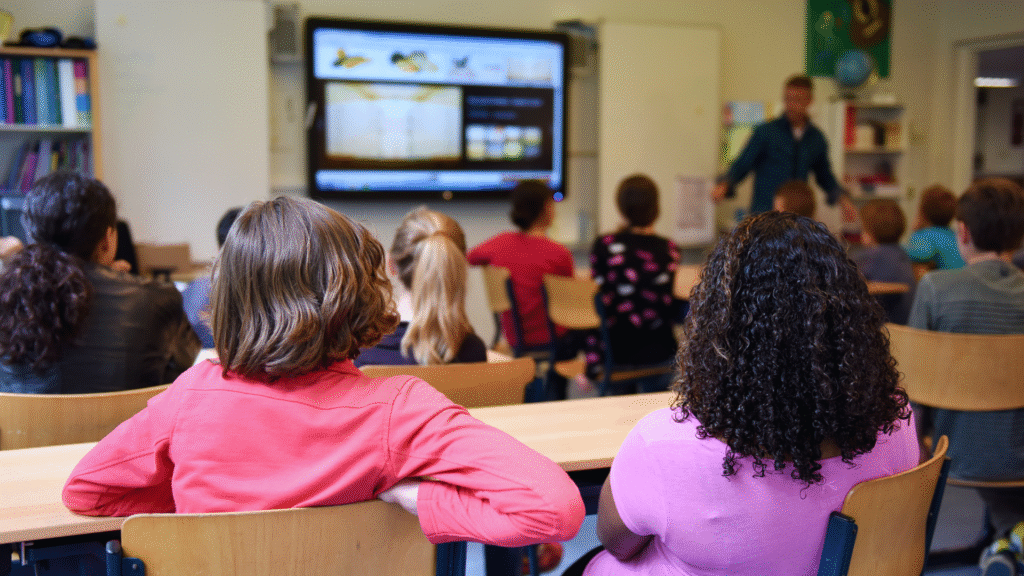
Schools are increasingly investing in classroom automation to improve efficiency and create a better learning environment. By integrating technology that automates routine tasks, educators can spend more time focusing on teaching and less on administrative duties.
The main reason for this investment is to enhance both teacher productivity and student engagement through seamless technology use. Automation tools help manage lighting, temperature, attendance, and digital resources, making classrooms more adaptable to different learning needs.
This shift reflects a broader trend towards using smart solutions to support education and address the challenges faced by modern schools. Automated systems can also contribute to cost savings and sustainable practices, which adds further appeal to school administrators.
Key Drivers Behind Classroom Automation
Schools invest in classroom automation to improve teaching processes, tailor learning experiences, and ease administrative burdens. These advances primarily focus on using artificial intelligence and edtech tools to support educators and students efficiently.
Enhancing Teaching Efficiency
Classroom automation integrates AI tools that streamline lesson planning, grading, and provide real-time feedback. These systems analyse student data quickly, allowing teachers to adjust their methods based on measurable outcomes.
Adaptive learning platforms help educators deliver tailored content without manually creating numerous resources. Automation also supports seamless classroom management, including attendance tracking and resource allocation, reducing time spent on routine tasks.
By adopting AI in education, schools gain systems that continuously update based on student performance. This leads to more precise instructional methods and improved curriculum delivery.
Personalising Student Learning
AI-driven programmes track individual progress, identifying strengths and weaknesses in real time. This enables personalised learning paths, catering to diverse learner needs and enhancing engagement.
Through automation, students receive customised exercises and feedback. The use of intelligent tutoring systems helps scaffold complex topics, promoting mastery for varied skill levels.
Personalisation powered by AI adoption encourages self-paced learning, helping students stay motivated without overwhelming teachers. The data insights generated also inform educators on where to focus support.
Reducing Teacher Workload
Automation relieves educators from repetitive administrative duties such as grading multiple-choice tests or compiling reports. AI tools handle bulk data processing, allowing teachers to concentrate on instruction and student interaction.
Edtech solutions can automate communication with parents and generate progress summaries automatically. This reduces the time teachers spend on coordination and documentation.
By decreasing manual tasks, classroom automation addresses teacher burnout and helps retain talented educators. This shift enables a more sustainable workload and better work-life balance.
Classroom Automation Technologies
Classroom automation integrates several advanced technologies that enhance teaching efficiency and student engagement. These include AI-driven tools, generative AI for content creation, and augmented reality to make learning more immersive.
Artificial Intelligence Applications
Artificial intelligence (AI) in classrooms automates tasks such as grading, attendance tracking, and personalised student feedback. AI-powered platforms analyse student performance data, enabling educators to identify learning gaps early.
Additionally, AI tools assist in creating adaptive learning environments. These adjust content difficulty based on real-time student progress, improving individual learning outcomes without additional teacher workload.
Such systems reduce administrative burdens, allowing teachers more time to focus on pedagogy and student interaction rather than routine tasks. The integration of AI also supports differentiated instruction, catering to diverse learning needs within a single classroom.
Generative AI in Lesson Planning
Generative AI streamlines lesson planning by quickly producing tailored educational materials. It can generate customised quizzes, reading passages, and multimedia resources based on curriculum goals.
Educators use generative AI to design differentiated activities aligned with students’ abilities and interests. This capability reduces preparation time and increases the variety of learning content available.
Moreover, generative AI assists in creating inclusive lesson plans that reflect diverse perspectives. Automating content creation helps schools keep up with evolving educational standards and supports consistent lesson quality.
Augmented Reality for Interactive Learning
Augmented reality (AR) transforms traditional lessons by overlaying digital content onto physical environments. This technology creates interactive experiences that enhance comprehension in subjects like science, history, and geography.
Students can manipulate 3D models, explore virtual environments, and engage with simulations, promoting active learning. AR also supports experiential learning, which has been shown to improve retention.
AR tools are increasingly integrated with edtech platforms, offering scalable solutions suitable for various teaching contexts. This approach makes complex concepts accessible and encourages student participation beyond textbooks.
Impact on Educators and Students
Classroom automation changes the roles of both teachers and pupils by integrating technology into daily learning and management tasks. It affects skills development, teaching methods, and access to education regardless of location.
Professional Development and Training
Educators require ongoing training to effectively use classroom automation tools like AI-driven grading systems and digital lesson planners. Schools often provide workshops that focus on software proficiency and data privacy.
Training includes understanding how AI can support individual learning styles without replacing teacher judgment. This helps teachers implement technology with confidence, avoiding technological dependency or misuse.
Familiarity with automation allows teachers to streamline administrative tasks, freeing up more time to focus on personalised instruction. It also prepares them to address technical issues independently.
Fostering Critical Thinking
Automation enhances critical thinking by freeing teachers from routine tasks to design more challenging activities. AI tools can provide real-time feedback, enabling students to reflect and adapt their approach during assignments.
Digital platforms encourage pupils to engage in problem-solving with data analysis, simulations, or interactive content that goes beyond memorisation. This supports higher-order thinking skills aligned with curriculum goals.
Automation also allows educators to monitor thought processes through analytics, identifying when students need targeted support to develop reasoning skills.
Supporting Remote Learning
Classroom automation is essential for effective remote learning by enabling seamless access to resources and communication. Tools such as AI tutors provide personalised support when teachers are not physically present.
It ensures continuity of education during disruptions, with platforms that track student engagement and progress remotely. Automated attendance and assessment systems reduce administrative burdens.
Automation also facilitates inclusive learning environments by accommodating different learning paces and styles through adaptable content delivery in virtual settings.
Challenges and Future Directions
Adopting AI tools in education involves navigating regulatory complexities and ensuring equitable access for all students. These challenges affect the pace and scope of classroom automation.
Policy and Safeguards
Schools must address data privacy, cybersecurity, and ethical use when integrating AI adoption. Protecting student information is a primary concern, with laws like GDPR demanding strict compliance.
Institutions need clear policies on AI tool use, covering consent, data retention, and transparency. Staff training is essential to understand ethical boundaries and manage AI responsibly.
Balancing innovation with risk management means ongoing review and adaptation of safeguarding measures. Governments and education bodies are expected to issue more detailed guidance as AI becomes widespread.
Accessibility and Inclusion
AI in education can personalise learning, but risks widening disparities if not accessible to all. Reliable internet, compatible devices, and adaptable software are critical for inclusive AI adoption.
Schools must prioritise tools designed with diverse needs in mind, including support for disabilities and language differences. Failure to accommodate these can leave some students behind.
Efforts to bridge the digital divide include funding for hardware and training. Equitable deployment ensures AI-driven innovation benefits every classroom, not just well-resourced ones.